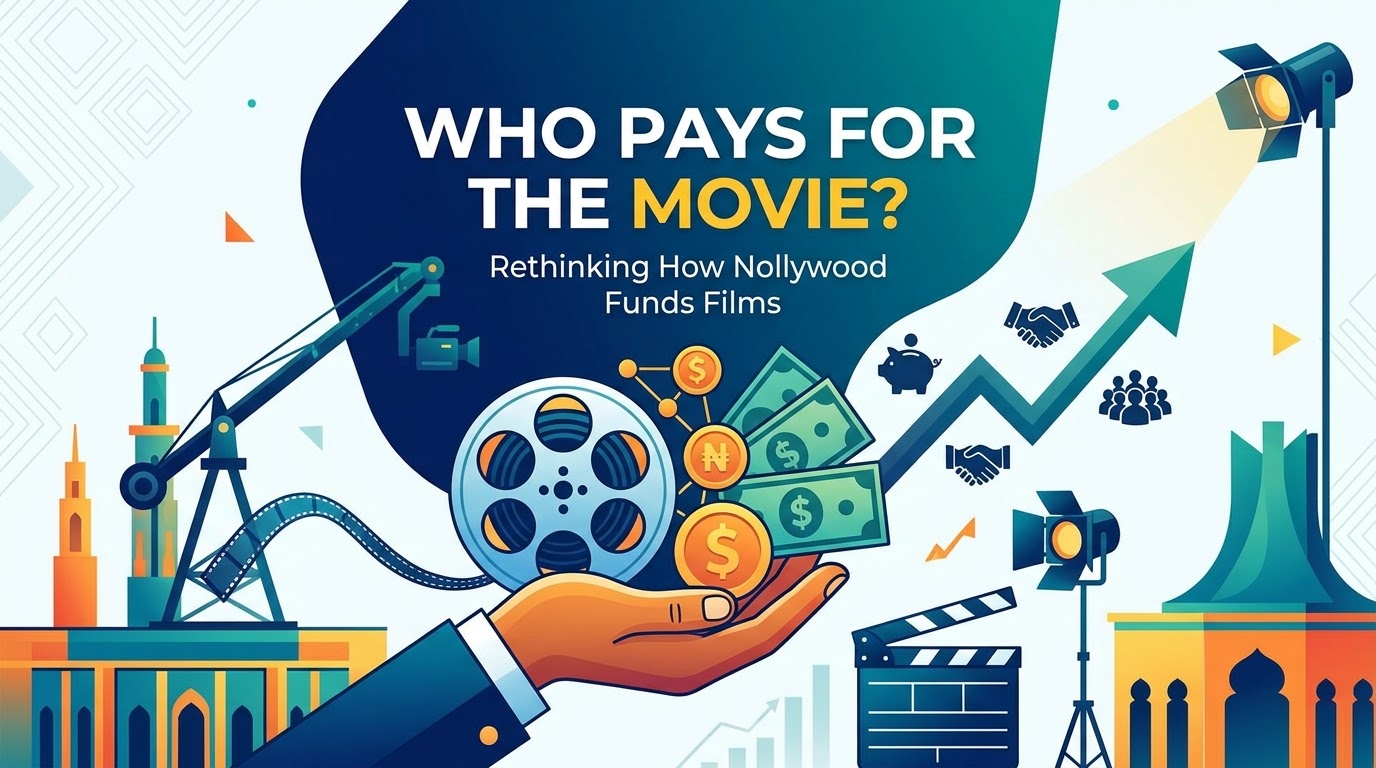
Nollywood has become one of Nigeria’s most recognizable cultural exports, with its films reaching audiences across cinemas, streaming platforms and international markets. From theatrical releases generating industry conversations to Nigerian stories finding new audiences on global platforms, the industry continues to demonstrate its commercial and cultural potential.
Visibility is not the same as viability. A film can perform well at the box office, secure a streaming deal or trend across social media without necessarily creating lasting financial value for its producers, crew or investors. If Nollywood is to evolve into a sustainable film industry, the conversation must move beyond individual successes to examine the systems that make those successes repeatable.
The real question is not whether Nollywood can produce successful films, but if it can build an ecosystem in which creative success translates into sustainable careers and long-term business value.
Commercial Success Is Only the Beginning, box office revenue, streaming acquisitions and audience engagement are important indicators of a film’s performance. However, they offer an incomplete picture of the health of the Nigerian film industry.
A commercially successful production does not automatically guarantee fair compensation for its cast and crew, profitability for its producer or sufficient returns for its investors. Production costs, marketing expenditure, distribution arrangements and revenue-sharing structures all influence the financial outcome of a project.
For many industry professionals, the challenge extends beyond getting a film made. It is securing consistent work, negotiating fair contracts and building careers that remain financially viable between productions.
A sustainable Nollywood must therefore measure success through broader indicators: profitability, employment stability, repeat investment, audience retention and the ability of filmmakers to develop successive projects without constantly rebuilding from financial uncertainty.
Financing, Ownership and the Business of Filmmaking: Film financing remains central to Nollywood’s long-term growth. While private investors, brand partnerships, grants and streaming commissions provide different routes to production, the industry needs financing structures that recognize film as both a creative product and a commercial asset.
Investors require credible budgets, transparent financial reporting, realistic revenue projections and clear recoupment arrangements. Producers, in turn, need financing models that do not compromise creative independence or place disproportionate financial risk on individuals.
Equally important is intellectual property (IP) ownership. A film’s commercial life does not necessarily end with its theatrical release or initial streaming window. Depending on the rights secured, a production may generate additional value through licensing, international distribution, television sales, remakes, adaptations and other ancillary opportunities.
Yet these opportunities depend on how rights are negotiated, documented, protected and exploited.
For Nollywood to build a stronger film economy, contracts must clearly establish ownership, licensing terms, revenue participation and the responsibilities of each stakeholder. Intellectual property should be treated as a long-term business asset, not merely a legal requirement attached to production.
Distribution is another critical component of a sustainable Nollywood film industry. Getting a film into cinemas or onto a streaming platform is an important milestone, but it should not be the endpoint of its commercial strategy.
Theatrical distribution, video-on-demand, streaming acquisitions, television licensing and international sales offer different routes to audiences and revenue. The appropriate combination depends on the film’s genre, budget, target audience and commercial objectives.
Producers must understand their audience beyond opening-weekend attendance and social media buzz. Data on audience behaviour, viewing patterns and market demand can inform distribution decisions, marketing campaigns and future investments.
This also creates opportunities for partnerships between filmmakers, distributors, cinemas, technology companies and marketing agencies. When these stakeholders collaborate strategically, films have a better chance of reaching the right audiences and generating value across multiple markets.
No film industry becomes sustainable through producers alone. It requires a functioning ecosystem of skilled professionals, investors, distributors, exhibitors, training institutions, legal practitioners, technology providers and public institutions.
Industry associations and institutions also have a role to play in encouraging professional standards, improving contractual practices and supporting skills development across the value chain. Meanwhile, investors and corporate partners must look beyond one-off sponsorships towards strategic relationships that support production, distribution and audience development.
The objective should be to create an environment where expertise, capital and opportunity circulate more effectively, allowing businesses to grow alongside the creative talent that powers them.